What Causes Industrial Compressor Surge
Compressor surge is more than a disruption in airflow. Left unchecked, it can place severe mechanical stress on critical compressor components and lead to costly equipment damage and unplanned downtime. For facilities operating centrifugal or axial compressors, understanding what causes surge, recognizing the warning signs, and knowing how surge-related damage is repaired can help protect equipment reliability. In this article, we’ll look at what causes compressor surge, how damage can vary by compressor type, and what to expect when industrial compressor repair is needed.
What Is Compressor Surge?
Compressor surge is a flow instability that occurs in centrifugal and axial compressors when flow through the machine drops below the minimum the compressor can sustain at a given pressure ratio. When that minimum is crossed, flow briefly reverses instead of continuing forward, and the cycle repeats roughly every one to five seconds in centrifugal machines. Each cycle subjects the rotor, bearings, and seals to a load reversal the equipment was not designed to absorb repeatedly.
What Causes Industrial Compressor Surge
Operating Below Minimum Flow
Every centrifugal compressor has a surge line — the boundary on its performance map below which stable operation is not possible at a given pressure ratio. Reduced process demand, a partially closed downstream valve, or a system resized after the compressor was originally selected can all push actual flow below that line without any fault in the equipment itself.
Fouled or Degraded Internals
Deposits on impeller blades or diffuser passages change the compressor’s actual performance curve, shifting the surge line and reducing the margin the machine was designed with. A compressor that operates clear of surge when new can begin surging at the same process conditions after a period of internal fouling or erosion, without any change to how the compressor is operated.
Anti-Surge Valve or Control System Malfunction
Anti-surge valves are the primary defense against surge, opening a recycle or blowoff path as flow approaches the surge line. A valve that responds too slowly, sticks partially open or closed, or was sized with inadequate margin will fail to prevent surge even when the control logic correctly identifies the approaching condition.
Upstream or Downstream Process Upsets
A blocked filter, a closing valve downstream, or a demand change upstream can drop flow through the compressor faster than the anti-surge system is tuned to respond. These causes originate outside the compressor package itself, in the connected process rather than in the machine. A compressor that has run for years without surging can begin doing so after a shift in downstream process demand moves its normal operating point closer to the surge line, even though the compressor itself has not changed.
Reciprocating vs. Centrifugal: Where Surge and Other Failures Show Up Differently
Surge is a centrifugal and axial compressor phenomenon — it depends on a continuous, dynamic pressure-flow relationship that reciprocating compressors do not have. That distinction matters for anyone evaluating industrial compressor repair, because the failure modes, diagnostic approach, and repair scope differ by machine type.
Centrifugal Compressors
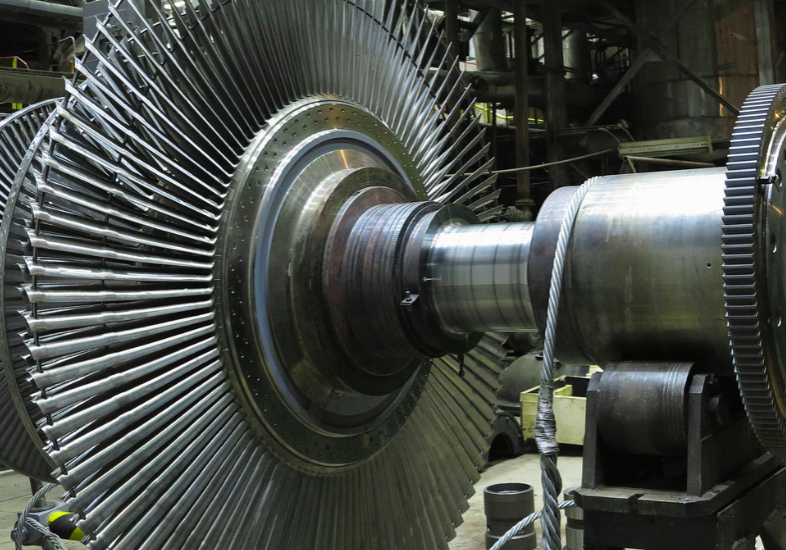
Centrifugal compressors are the machines that surge. Repair following a surge event typically involves inspecting the rotor for axial thrust damage, checking labyrinth seals and thrust bearings for wear, and verifying the impeller and diffuser have not sustained blade-loading damage from the reversed flow.
Reciprocating Compressors
Reciprocating compressors do not surge. They carry a different set of risks — capacity control problems, valve failure, and rod packing wear — that can produce similar symptoms, including pulsation, vibration, and reduced output, through a different mechanism.
Understanding the Unloader Valve’s Role
On reciprocating compressors, unloader valves manage capacity by holding suction valves open during part of the compression stroke, so gas is not compressed in that cylinder for that portion of the cycle. A stuck or leaking unloader valve does not cause surge, but it produces symptoms — pulsation, reduced discharge pressure, inconsistent loading — that can be mistaken for surge-related instability if the compressor type is not correctly identified first.
Vibration and pulsation symptoms on a reciprocating compressor can be mistaken for surge, even though reciprocating machines do not surge. Confirming compressor type before diagnosing the failure mode changes where the investigation focuses — typically toward a valve or unloader issue rather than a control system correction.
How to Recognize Surge Before It Becomes a Failure
Surge rarely occurs without warning. Recognizing the early signs allows operators to intervene before repeated surge cycles cause irreversible damage to the compressor.
Sound: Centrifugal surge produces an audible thumping or honking at a low, repeating frequency, distinct from the steady tone of normal operation.
Vibration: Surge produces a vibration signature that recurs roughly every one to five seconds in centrifugal machines. Vibration analysis that identifies this pattern helps confirm surge as distinct from another vibration source.
Performance degradation: Discharge pressure and flow oscillate rather than holding steady, and the compressor may be unable to reach its normal operating point.
Inspection findings: An opened compressor that has been surging shows thrust bearing wear and seal damage, and sometimes blade damage concentrated asymmetrically from the initiating surge cycles, even before the fully developed cycle becomes symmetric.
Turbomachinery Magazine cites roughly half an hour of accumulated surge time as enough to damage a centrifugal compressor beyond an acceptable level, even though any single surge cycle lasts only one to five seconds.
Fixing the Immediate Damage
Repair scope after a surge event depends on how long the condition went undetected and which components absorbed the load.
Thrust bearing and seal replacement is a typical repair following a surge event, since these components absorb the axial load reversal.
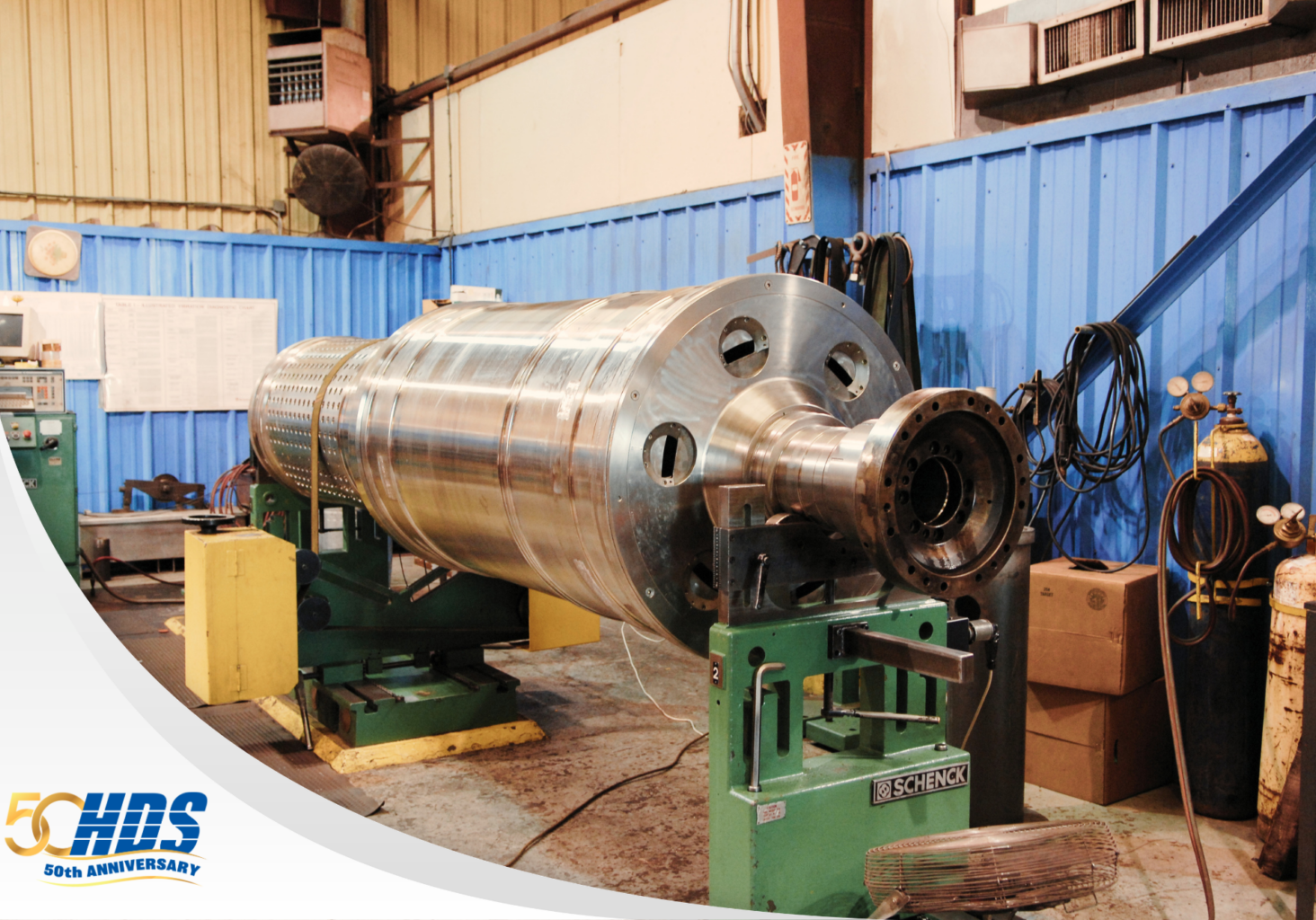
Rotor inspection and rebalancing is necessary when blade loading from the initiating surge cycles has affected rotor balance, particularly given the asymmetric loading in the early stage of a surge event.
Impeller and diffuser inspection identifies blade damage or erosion from repeated flow reversal, with repair or replacement scoped to the extent of damage found. Houston Dynamic’s in-house CNC department supports impeller and rotor machining without routing that work to an outside vendor.
Fixing the Root Cause
Repairing the mechanical damage without correcting the condition that caused surge puts the compressor back in the same position at the next operating excursion.
If it’s a minimum-flow problem: Reassess whether current process demand still matches the compressor’s original design point, and evaluate whether recycle or blowoff capacity needs adjustment.
If it’s fouled or degraded internals: Cleaning or component replacement can restore the surge margin the compressor was originally designed with.
If it’s an anti-surge valve or control issue: Valve response time, sizing, and control logic should be reviewed and corrected before the compressor returns to service.
If it’s a process-side upset: Address the upstream or downstream change driving the flow disturbance, since the compressor itself may not be at fault.
When to Bring It In
If a compressor is showing surge symptoms, or has already been through a surge event, it should have a full inspection before returning to continuous service. Houston Dynamic has decades of experience with industrial compressor repair, including rotor inspection, bearing and seal replacement, and full teardown evaluation for rotating equipment across energy, petrochemical, and manufacturing facilities. A 20-ton overhead crane with 24-foot hook height handles the larger rotating assemblies this work can involve.
Frequently Asked Questions
Centrifugal compressor surge can produce a low-frequency thumping or honking sound, distinct from the continuous tone of normal operation. Not every surge event is loud enough to identify by ear alone, which is why vibration and flow-based detection are also used to confirm it.
Individual surge cycles last roughly one to five seconds in centrifugal compressors, but damage accumulates with repeated cycling. Turbomachinery Magazine cites roughly half an hour of total accumulated surge time as enough to damage a compressor beyond an acceptable level, even though any single cycle is brief.
No. Surge is specific to centrifugal and axial compressors, which rely on a continuous dynamic pressure-flow relationship that reciprocating compressors do not have (Quincy Compressor). Reciprocating compressors experience different failure modes, including valve failure, rod packing wear, and unloader valve problems, that can produce similar symptoms through a different mechanism.
An anti-surge valve opens a recycle or blowoff path as compressor flow approaches the surge line, keeping actual flow above the minimum stable point. If the valve responds too slowly or is undersized for the application, it can fail to prevent surge even when the control system correctly detects the approaching condition.
An unloader valve manages capacity on a reciprocating compressor by holding suction valves open during part of the compression stroke, so gas in that cylinder is not compressed during that portion of the cycle. A failing unloader valve does not cause surge, but it can produce pulsation and output symptoms that require correct diagnosis to identify the failure mode.
Repair scope depends on how long the surge condition persisted before it was caught. Work can include thrust bearing and seal replacement, rotor inspection and rebalancing, and impeller or diffuser inspection for blade damage, followed by root-cause correction so the compressor does not return to the same operating condition.
If inspection shows physical damage to bearings, seals, or the rotor, the compressor needs a repair regardless of what caused the surge. If no damage is found and the condition was caught early, correcting the operating condition — anti-surge valve tuning or a process flow change — may be sufficient without a physical repair.
Share this post:
Recent posts: