What to Look for in a Large Capacity Machine Shop for Rotating Equipment Repair
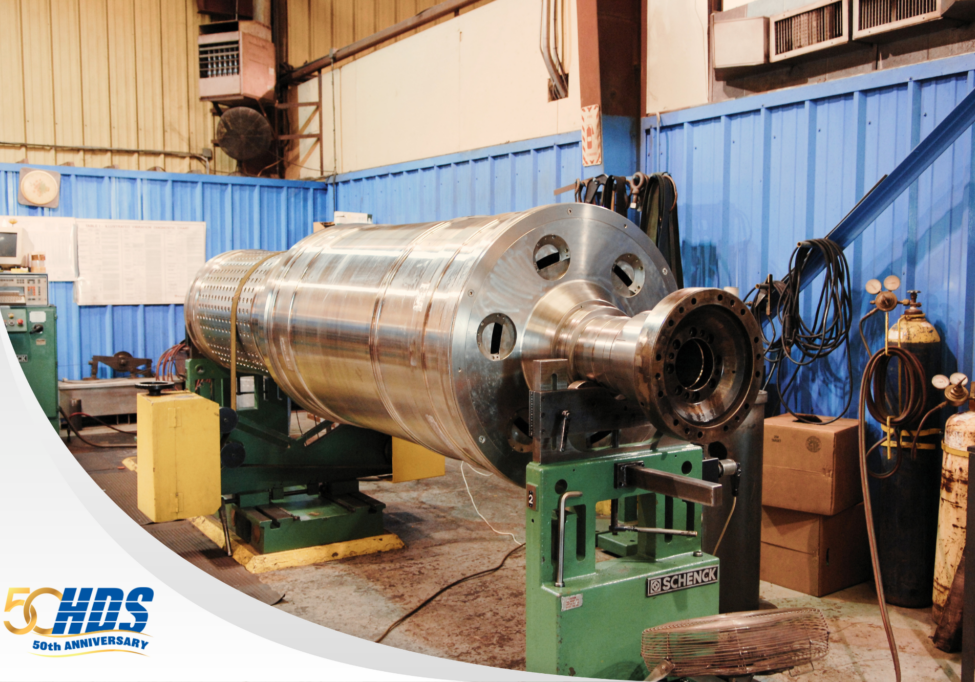
Not every machine shop can handle industrial-scale rotating equipment. When a turbine shaft, large compressor housing, or multi-stage gearbox requires precision repair, the capabilities of the shop performing the work directly determine the quality of the outcome. Understanding what separates a large capacity machine shop from a general facility helps plant managers and engineers make confident decisions before downtime becomes a crisis.
What Is a Large Capacity Machine Shop?
A large capacity machine shop is a precision machining facility equipped to handle oversized or heavy industrial components that exceed the dimensional and weight limits of standard shops. In the context of rotating equipment repair, large capacity refers to the ability to machine, bore, turn, and balance components such as turbine rotors, large pump casings, compressor shafts, and gearbox housings that may weigh several tons and span several feet in diameter or length.
Large capacity does not simply mean physical size. It includes the tonnage rating of overhead cranes, the swing diameter of lathes, the table size of horizontal boring mills, and the rated capacity of dynamic balancing machines. Each of these specifications establishes a hard limit on what a shop can physically accept and complete without outsourcing critical steps to a third party.
Why Machine Shop Capacity Directly Affects Repair Outcomes
Rotating equipment repair does not tolerate compromise. Components such as turbine rotors and compressor shafts operate at high speeds under continuous mechanical load, and dimensional tolerances are measured in thousandths of an inch. A shop that lacks the equipment to machine a component to full specification must either work around its limitations or subcontract the work.
Subcontracting introduces compounding risks. Chain of custody transfers to a third party. Quality oversight becomes indirect. Turnaround time increases. For facilities that depend on rotating equipment to maintain production, additional days of downtime carry direct operational and financial consequences. A shop with the capacity to complete all machining, balancing, and fabrication in-house eliminates those variables entirely.
In-house dynamic balancing is particularly critical. A rotor that has been machined but sent off-site for balancing travels through an additional handling chain before it returns. Tolerances achieved on the lathe need to be preserved through every subsequent step. When machining and balancing happen under the same roof and the same quality system, that continuity is maintained.
Key Capabilities a Large Capacity Machine Shop Should Have
Heavy-Duty Turning, Boring, and CNC Machining
Large lathes with sufficient swing diameter and bed length are essential for machining turbine shafts, pump sleeves, and large rotating components. Horizontal boring mills with adequate table size handle compressor housings and gearbox cases. CNC capability adds precision and repeatability for components requiring consistent tolerances across multiple features. The specifications of these machines establish the real working limits of what a shop can accept and complete. Review HDS’s machining capabilities for a full list of equipment and services.
Crane and Rigging Capacity Rated for Industrial Components
Overhead crane capacity is a practical constraint that is easy to overlook until it isn’t. Heavy rotating equipment components — large pump casings, turbine assemblies, compressor bodies — require adequate lifting capacity at every stage of handling: incoming, during machining setup, and at reassembly. A shop with undersized crane capacity must decline certain work or handle heavy components in ways that introduce damage risk. Crane tonnage and hook height are straightforward specifications to ask for upfront.
In-House Dynamic Balancing
A rotor with residual imbalance will generate vibration, accelerate bearing wear, and reduce the service life of the repaired equipment. Dynamic balancing must be performed on equipment rated for the component weights and rotational speeds involved. Shops that send components off-site for balancing add transit time, handling exposure, and a quality handoff point to every repair. In-house balancing, performed immediately after final machining, keeps the repair process integrated and accountable.
Welding, Fabrication, and Component Manufacturing
Complex rotating equipment repairs frequently require more than machining. Worn housings need weld buildup and remachining. Damaged components may require fabrication of replacement parts. A shop capable of in-house welding, fabrication, and component manufacturing can address the full scope of a repair without coordinating external vendors for each step. This directly affects both turnaround time and the consistency of quality controls applied across the repair.
On-Site Testing Before Return to Service
A large capacity shop should be able to test repaired equipment before it leaves the facility. Overspeed testing for turbines, hydraulic testing for pumps, and no-load spin testing for gearboxes confirm that repaired equipment meets specifications before it is reinstalled. Testing at the repair facility identifies issues under controlled conditions rather than discovering them after the equipment is back in service. See the full list of HDS in-house capabilities including disassembly, inspection, and on-site testing.
Certifications and Quality Standards That Matter
ISO 9001 certification is the baseline quality management standard for precision machining and repair facilities. It establishes documented procedures for inspection, traceability, corrective action, and continuous improvement across every stage of the repair process. The standard is published by the International Organization for Standardization and requires independent audit to obtain and maintain — it cannot be self-declared.
For plant managers evaluating repair partners, certification confirms that the shop operates under a structured, documented quality system — not informal shop practices that vary by technician or job. HDS has held ISO 9001 certification since 2014 and maintains it through ongoing independent audit.
Authorized service center designations from original equipment manufacturers carry additional weight. HDS holds authorized service center status with Rexnord, indicating the shop has been evaluated and approved to perform repairs on specific equipment lines to OEM specifications. These designations require demonstrated capability and ongoing compliance; they are not automatically granted to any shop that applies.
Quality documentation is equally important as the certifications themselves. A qualified shop provides complete repair records for every job — dimensional inspection reports, balancing data, material certifications, and test results. This documentation supports the customer’s own maintenance records and provides traceability if questions arise after the equipment is returned to service.
Facility Investment as an Indicator of Commitment
A shop’s willingness to invest in its facility over time reflects its commitment to the work it takes on. Incremental expansions — additional floor space, new equipment, upgraded infrastructure — indicate a shop that is actively maintaining and improving its capability rather than coasting on legacy equipment.
Relevant investments to ask about include expansions to the mechanical repair area, additions of overhead crane capacity, CNC equipment upgrades, and dedicated departments for specialized work such as balancing or testing. These specifics are more informative than general claims about being a modern or well-equipped facility.
Why Decades of Experience in Specific Equipment Types Matters
Equipment specifications establish what a shop can do. Experience determines how well they do it. Industrial rotating equipment operates under standards set by bodies such as the American Society of Mechanical Engineers, and shops with long-tenured experience in these equipment types develop fluency with those standards that a general machinist cannot replicate.
Experience specific to equipment type is particularly valuable. A shop that has repaired steam turbines, centrifugal compressors, and industrial gearboxes for refining and petrochemical operations over many decades will recognize wear patterns and failure modes that a generalist machinist will not. That pattern recognition reduces diagnostic time, informs repair decisions, and improves the likelihood that the repaired equipment performs reliably over its next service interval.
Years in business is a starting point, but the more relevant question is how many repairs of a specific equipment type the shop has completed, and in which industries. A shop that has operated on the Houston Ship Channel for 50 years has accumulated a volume and variety of rotating equipment repair experience that is not replicated by a newer or more general facility.
The Case for a Local Large Capacity Machine Shop in Houston
Houston is one of the most concentrated industrial corridors in the United States, with a high density of refining, petrochemical, power generation, and manufacturing operations within a relatively compact geographic area. For facilities in this region, a locally based large capacity machine shop offers advantages that a national facility cannot fully replicate.
Freight risk for heavy rotating equipment is real and underappreciated. Large turbine rotors, compressor housings, and pump casings are difficult to package and transport without risk of damage. Shipping components across the country adds days to the repair timeline and introduces a handling chain that is difficult to monitor. A local shop eliminates long-distance freight, reduces transit risk, and allows faster return to service.
Direct access to the shop during a repair also changes the quality of the outcome. When an engineer can visit the facility, review the component condition in person, and discuss repair options directly with the technician performing the work, decisions are better informed. That level of access is not available with a remote vendor.
Southeast Houston’s position relative to the Ship Channel means that a local shop is not just geographically convenient — it is operating in the same industrial environment as the customers it serves. The equipment types, operating conditions, and industry standards that matter to a refinery or petrochemical plant are not abstractions to a shop that has worked with that sector for decades.
| See What We Can Repair Houston Dynamic Service has repaired turbines, compressors, pumps, gearboxes, centrifuges, fans, and blowers for the energy, petrochemical, and manufacturing industries for over 50 years. Tell us what you have. houstondynamic.com/contact-houston-dynamic/ |
Questions to Ask Before Choosing a Large Capacity Machine Shop
The following questions give plant managers and engineers a practical framework for evaluating a machine shop before committing to a repair:
- What is the overhead crane capacity and hook height in your facility?
- Do you perform dynamic balancing in-house, and what is the rated capacity of your balancing equipment?
- What on-site testing do you perform before returning repaired equipment to the customer?
- Are you ISO 9001 certified, and can you provide quality documentation for each repair?
- Do you hold any authorized service center designations from OEMs?
- What is your experience repairing this specific equipment type and in our industry?
- Can you perform welding, fabrication, and component manufacturing in-house if needed?
- What is your typical turnaround time for a repair of this scope, and do you offer emergency repair services?
A shop with genuine large capacity and established experience will answer each of these questions directly and specifically. Vague responses to technical questions are worth taking seriously as a signal.
Choosing a Repair Partner Before You Need One
The best time to evaluate a large capacity machine shop is before a critical piece of rotating equipment requires urgent repair. Unplanned downtime compresses decision timelines and limits options. Plant managers and engineers who have already vetted a qualified local shop are in a significantly stronger position when equipment failure occurs.
Houston Dynamic Service has operated as a large capacity machine shop in southeast Houston for over 50 years. The facility has expanded continuously, adding floor space, a 20-ton overhead crane, CNC machining capability, and a dedicated Sundyne test stand. The company is ISO 9001 certified — a certification earned in 2014 and maintained independently since — and holds authorized service center status with Rexnord. HDS is veteran-owned, with leadership that has been directly involved in the facility since the company was acquired and rebuilt from the ground up in 2001. View the full range of rotating equipment repair services HDS provides across turbines, compressors, pumps, gearboxes, centrifuges, and fans.
In-house capabilities include precision machining, dynamic balancing, welding and fabrication, component manufacturing, overspeed testing, reverse engineering, and CAD. The facility operates 24 hours a day, seven days a week — including 24/7 emergency repair for critical equipment failures that cannot wait for scheduled downtime.
Frequently Asked Questions
A large capacity machine shop is a precision machining facility with the equipment, crane capacity, and floor space to handle oversized industrial components. In rotating equipment repair, this means lathes with swing diameters large enough to accommodate turbine and compressor shafts, horizontal boring mills for large housings, CNC machining capability, and dynamic balancing machines rated for heavy rotors. The term refers to demonstrated physical and technical capability — not facility size alone.
A qualified large capacity machine shop should be able to handle components ranging from small pump impellers to large turbine rotors and compressor casings weighing multiple tons. Key specifications to request include maximum crane lifting capacity, hook height, maximum component weight the shop can accept, and balancing machine capacity. These numbers define the actual working limits of the facility and are straightforward for a qualified shop to provide.
Rotating equipment operates under continuous mechanical stress at high speeds and tight tolerances. When a shop lacks the capacity to complete all machining, balancing, and fabrication steps in-house, it must subcontract portions of the work. Subcontracting introduces handling risk, quality gaps between vendors, and extended turnaround times. A shop with full in-house capacity completes all work under one quality system — which directly improves repair consistency and reduces downtime for the customer.
ISO 9001 certification is the foundational quality management standard. It establishes documented controls for inspection, traceability, and corrective action throughout the repair process, and requires independent audit to obtain and maintain. Beyond ISO 9001, authorized service center designations from specific OEMs confirm that the shop meets manufacturer standards for particular equipment lines. Customers should also request complete quality documentation packages — including dimensional inspection reports, balancing records, and test results — as a standard part of every repair.
For large rotating equipment components, a local shop offers meaningful advantages. Heavy components carry real freight risk, and long-distance shipping adds days to the repair timeline. A local shop in Houston eliminates transit risk, allows direct communication and on-site visits during the repair, and supports faster return to service. For facilities on the Houston Ship Channel and in the surrounding industrial corridor, a locally based shop operating in the same environment also brings relevant industry context that a geographically distant vendor may lack.
Ask directly about the volume and type of repairs the shop has completed on equipment similar to yours — not just years in business, but equipment-specific history in your industry. Request references from customers in your sector. A shop with 50 years of rotating equipment repair serving refining, petrochemical, and power generation operations has accumulated a depth and variety of experience that general claims cannot convey. The specifics of what a shop has repaired, and for whom, are more informative than any general statement about expertise.
Share this post:
Recent posts: